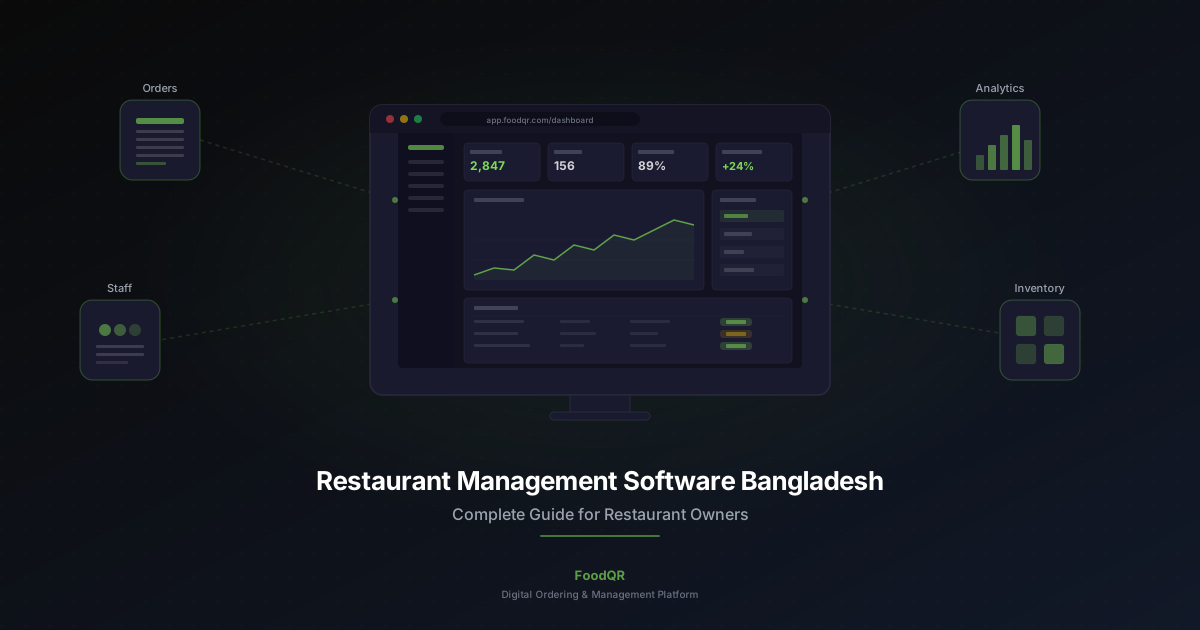
Restaurant Management Software Bangladesh: Complete Guide for Owners
The Bangladesh restaurant industry is at a turning point. With over 60,000 registered food establishments across the country and intense competition in cities like Dhaka and Chittagong, the restaurants that thrive in 2026 and beyond will be the ones that embrace digital tools to streamline operations and elevate customer experience.
This guide covers everything you need to know about restaurant management software — what it is, what modules matter, and how to choose the right solution for your business.
What Is Restaurant Management Software?
Restaurant management software is an integrated platform that handles the day-to-day operations of running a restaurant. Instead of using separate tools for billing, inventory, staff scheduling, and customer orders, a management platform brings everything into one system.
Think of it as the digital nervous system of your restaurant — connecting the front of house, kitchen, and back office into a single, coordinated operation.
Core Modules You Need
### Point of Sale (POS)
The foundation of any restaurant management system. A modern POS handles order entry, billing, payment processing (cash, bKash, Nagad, cards), receipt generation, and daily sales tracking. It replaces your cash register and manual billing book.
### QR Code Ordering
Customers scan a QR code at their table, browse the menu on their phone, and place orders directly. No app download required. Orders flow straight to the kitchen. This reduces wait times, eliminates order errors, and frees your staff to focus on hospitality rather than order-taking.
### Kitchen Display System (KDS)
A digital screen in the kitchen that shows incoming orders in real time. No more lost paper tickets or shouted orders. Kitchen staff see exactly what to prepare, in what sequence, with any special instructions highlighted. Orders are marked complete with a tap, and the front of house is notified instantly.
### Analytics and Reporting
Real-time dashboards showing revenue, order volume, popular items, peak hours, and staff performance. Daily, weekly, and monthly reports help you make data-driven decisions about your menu, pricing, staffing, and marketing.
### Staff Management
Track employee shifts, attendance, and performance. Assign roles and permissions — a cashier should not have access to financial reports, and kitchen staff do not need to see revenue data.
### Multi-Branch Management
For restaurant chains, centralized control over menus, pricing, and reporting across all locations. Update a menu item once and have it reflect everywhere, or customize per branch as needed.
### Inventory Tracking
Monitor stock levels, set low-stock alerts, and track ingredient usage per dish. Reduce waste by knowing exactly what you have, what you need, and what is expiring soon.
Benefits for Bangladesh Restaurants Specifically
Faster Service During Peak Hours: Dhaka lunch rushes are intense. A 50-seat restaurant in Banani can lose ৳20,000-30,000 daily if service is slow. Digital ordering and kitchen display systems cut order-to-table time by 30-40%.
Accurate Financial Records: With NBR increasingly focused on VAT compliance for restaurants, having digital sales records makes tax filing straightforward and audit-proof.
Better Customer Experience: Young, urban customers in Gulshan, Uttara, and Chittagong expect digital menus and payment options. Meeting this expectation builds loyalty and drives repeat visits.
Data for Growth Decisions: When you are deciding whether to open a second branch or which menu items to promote, real data beats guesswork every time.
Challenges Bangladesh Owners Face
### Load Shedding and Connectivity
Power outages remain common outside of premium areas. Your software must work offline — queuing orders locally and syncing when power returns. Any system that goes completely down during an outage is not suitable for Bangladesh.
### Local Payment Integration
bKash and Nagad are not optional — they are essential. Over 70% of digital transactions in Bangladesh flow through these two platforms. Your management software must integrate with them natively, not through clunky workarounds.
### Bangla Language Support
Not every staff member is comfortable with English interfaces. Bangla support — especially for kitchen display and POS screens — reduces training time and errors.
### Affordable Pricing
Most Bangladeshi restaurants operate on tighter margins than their Western counterparts. Software priced in USD at Western rates is simply not viable for a restaurant in Mirpur doing ৳2,00,000/month in revenue.
How to Evaluate Your Options
Step 1: List your pain points. What is costing you money or customers right now? Slow ordering? Inventory waste? Billing errors? This determines which modules you need most.
Step 2: Request demos. Never buy restaurant software without seeing it in action with your actual menu and workflow. Load your real menu items, simulate a busy period, test payment processing.
Step 3: Check local references. Ask the vendor for references from restaurants similar to yours in size and cuisine. Call those restaurants and ask about their experience — especially about support responsiveness.
Step 4: Test offline mode. Turn off the internet during your demo and see what happens. If the system freezes, move on.
Step 5: Confirm pricing transparency. Get the total cost in writing — monthly fees, setup fees, hardware requirements, training costs, and any transaction-based charges.
Implementation Timeline
A realistic timeline for implementing restaurant management software:
Week 1: Menu setup, staff account creation, hardware installation (if any).
Week 2: Staff training — start with POS basics, then introduce kitchen display and QR ordering.
Week 3: Soft launch — use the new system alongside your existing process. Catch issues before going fully digital.
Week 4: Full launch — retire the old process. Monitor closely and address any issues immediately.
Getting Started
Platforms like Restoio are designed specifically for this market — built with Bangladesh's unique challenges in mind, from offline capability to bKash integration to affordable pricing. Starting with a demo or free trial lets you experience the system with zero risk before committing.
The restaurants that invest in proper management software today will be the ones dominating their neighborhoods tomorrow. The question is not whether to digitize — it is how soon you can start.