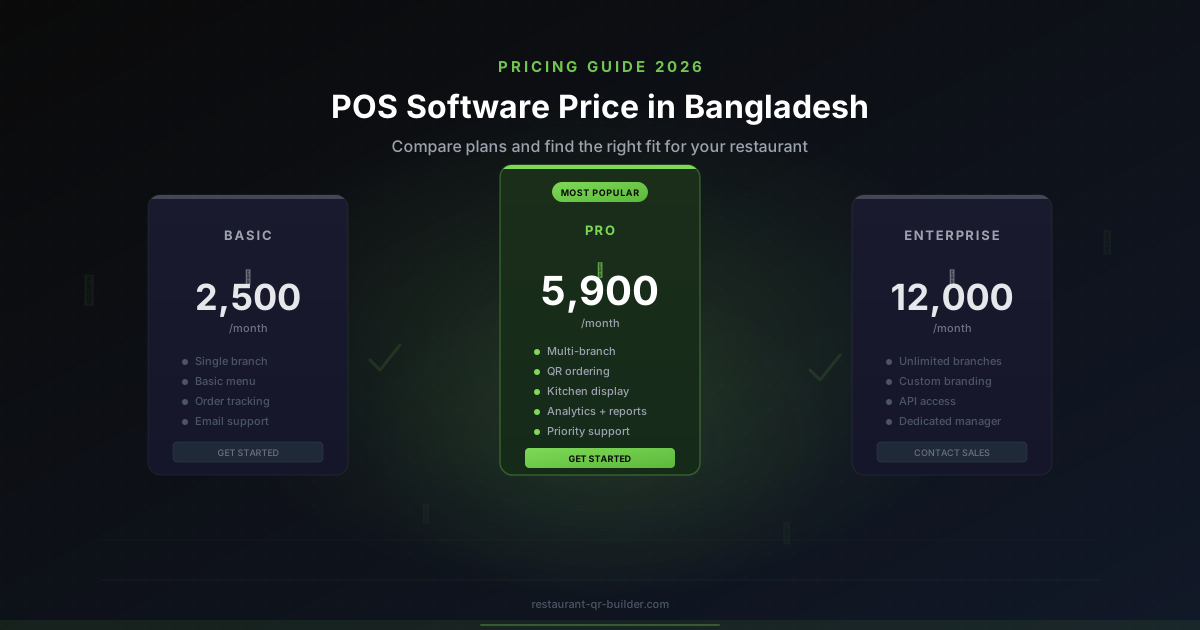
POS Software Price in Bangladesh: What to Expect in 2026
Cost is the first question most Bangladesh restaurant owners ask when exploring POS software. And it is a fair question — margins in the restaurant business are tight, and every taka of overhead matters. But understanding POS pricing requires looking beyond the sticker price.
This guide breaks down what POS software actually costs in Bangladesh in 2026, what you get at each price point, and how to avoid hidden expenses that inflate your total cost of ownership.
Pricing Models Explained
POS software in Bangladesh follows three main pricing models:
One-Time License: You pay a flat fee upfront (typically ৳15,000-৳80,000) and own the software. Updates may or may not be included. Common with local vendors selling desktop-based POS systems. Lower long-term cost but often lacks cloud features and ongoing support.
Monthly Subscription: You pay ৳1,000-৳10,000+ per month for access to cloud-based software. Updates, support, and hosting are included. This is the global standard and increasingly popular in Bangladesh. Lower upfront cost but ongoing commitment.
Transaction-Based: Some platforms charge a percentage (1-3%) per transaction on top of a base fee. This can add up quickly for high-volume restaurants. Common with delivery platforms and some payment-integrated systems.
Price Ranges in the Bangladesh Market
### Free and Open-Source: ৳0/month
Options like Floreant POS or uniCenta are technically free to download. However, the real costs are hidden: you need technical staff to set up and maintain the system, there is no local support, no bKash integration, and no cloud access. A restaurant owner in Dhanmondi recently shared that their "free" POS ended up costing ৳50,000+ in setup fees to a freelance developer — and still lacked basic features.
### Basic Tier: ৳1,000-৳3,000/month
At this range, you get fundamental POS features — order entry, basic reporting, receipt printing. Some options include simple inventory tracking. Typically suitable for single-location restaurants with straightforward menus. Limited or no QR ordering, kitchen display, or multi-branch support.
### Mid-Range: ৳3,000-৳8,000/month
This is the sweet spot for most established restaurants. Expect cloud-based access, real-time analytics, bKash/Nagad integration, kitchen display system, QR ordering, and basic multi-branch support. Restoio falls in this range, offering a comprehensive feature set without the premium price tag.
### Premium: ৳8,000+/month
Enterprise-grade solutions with advanced features — detailed inventory management with supplier integration, loyalty programs, advanced analytics with AI-driven insights, dedicated account management, and custom development. Best for restaurant chains with five or more branches.
What Is Included at Each Tier
Understanding what is bundled versus what costs extra is critical:
| Included? | Basic | Mid-Range | Premium |
|-----------|-------|-----------|---------|
| POS Terminal | Yes | Yes | Yes |
| Cloud Access | Sometimes | Yes | Yes |
| bKash/Nagad | Rarely | Usually | Yes |
| Kitchen Display | No | Yes | Yes |
| QR Ordering | No | Usually | Yes |
| Multi-Branch | No | Basic | Advanced |
| Analytics | Basic | Detailed | Advanced + AI |
| Support | Email | Phone + Chat | Dedicated Manager |
| Training | Self-serve | Included | On-site |
Hidden Costs to Watch For
Hardware: Some POS systems require proprietary hardware — specific tablets, receipt printers, or card readers. Ask what hardware is required and whether you can use existing devices. A tablet-based system that works on any Android device or browser saves you ৳20,000-৳50,000 in hardware costs.
Setup and Installation: Some vendors charge ৳5,000-৳20,000 for initial setup, menu entry, and configuration. Others include it in the subscription. Always ask.
Training: If your staff needs on-site training, confirm whether that is included or billed separately. Training costs of ৳3,000-৳10,000 per session are common.
Updates and Upgrades: One-time license models often charge for major updates. Subscription models typically include all updates.
Data Export: If you ever want to leave, can you export your sales data, customer records, and menu? Some vendors make migration difficult on purpose.
How to Calculate ROI
Do not just compare monthly costs — calculate what the POS saves you and earns you:
Time Savings: If your staff spends 30 minutes less per day on manual order management, that is 15 hours per month. At ৳150/hour, that is ৳2,250 saved.
Error Reduction: If order errors cost you ৳500/day in remakes and customer complaints, a POS that eliminates 80% of those errors saves ৳12,000/month.
Revenue Increase: QR ordering with upsell suggestions typically increases average order value by 15-20%. For a restaurant doing ৳1,50,000/month, that is ৳22,500-৳30,000 in additional revenue.
Add those up, and even a ৳5,000/month POS system pays for itself several times over.
Making the Right Investment
Start by honestly assessing your current pain points. If you are losing money to order errors, slow service, or poor inventory tracking, a mid-range POS will likely pay for itself within the first month.
If you are a small tea stall or street food vendor doing under ৳50,000/month in revenue, a basic or free option might genuinely be sufficient for now.
For most sit-down restaurants in Dhaka, Chittagong, or Sylhet doing ৳1,00,000+ monthly, investing ৳3,000-৳8,000/month in a proper POS system is one of the highest-ROI decisions you can make.